
Searching for Ursa Minor Stars at Large Radii
Abstract
This study focuses on the characterization of stellar membership in the Ursa Minor Dwarf Galaxy (UMi), with a particular emphasis on identifying potential members located in the galaxy’s outskirts. Using data obtained from a Dark Energy Spectroscopic Instrument (DESI) Tertiary Program, which includes 6,548 stars, we applied a Gaussian Mixture Model combined with Markov Chain Monte Carlo sampling to estimate membership probabilities based on radial velocities and metallicities from DESI, and proper motions from Gaia. Stars with a membership probability threshold greater than 0.7 were further analyzed, leading to the confirmation of 2,851 members within 18 half-light radii (r_h). To explore the outskirts, we used the DESI Jura dataset and extended our search to stars beyond 20 r_h. Through this analysis, four potential outskirt members were identified, whose kinematics and chemodynamics align with those expected of UMi members.
1. Introduction
One of the central challenges in studying dwarf galaxies is determining the membership and spatial distribution of their stars, especially in the outskirts, where the gravitational pull of the galaxy weakens, and external forces such as mergers, ram pressure stripping, tidal interaction, and re-ionization become more pronounced. These processes can significantly shape the morphology and stellar distribution within these galaxies, often manifesting most prominently in their outskirts.
Recent advancements in astrometric and photometric data, particularly from the Gaia mission, have enabled the detection of stars in the extreme peripheries of dwarf galaxies. Previous studies have identified member stars up to nine half-light radii from the center of the Tucana II dwarf galaxy (Chiti et al. 2021), explored the chemo-dynamical properties of Bootes I (Filion & Wyse 2021; Longeard et al. 2022), identified a break in the density distribution of Fornax (Yang et al. 2022), and found new members in Hercules up to ten half-light radii (Longeard et al. 2023).
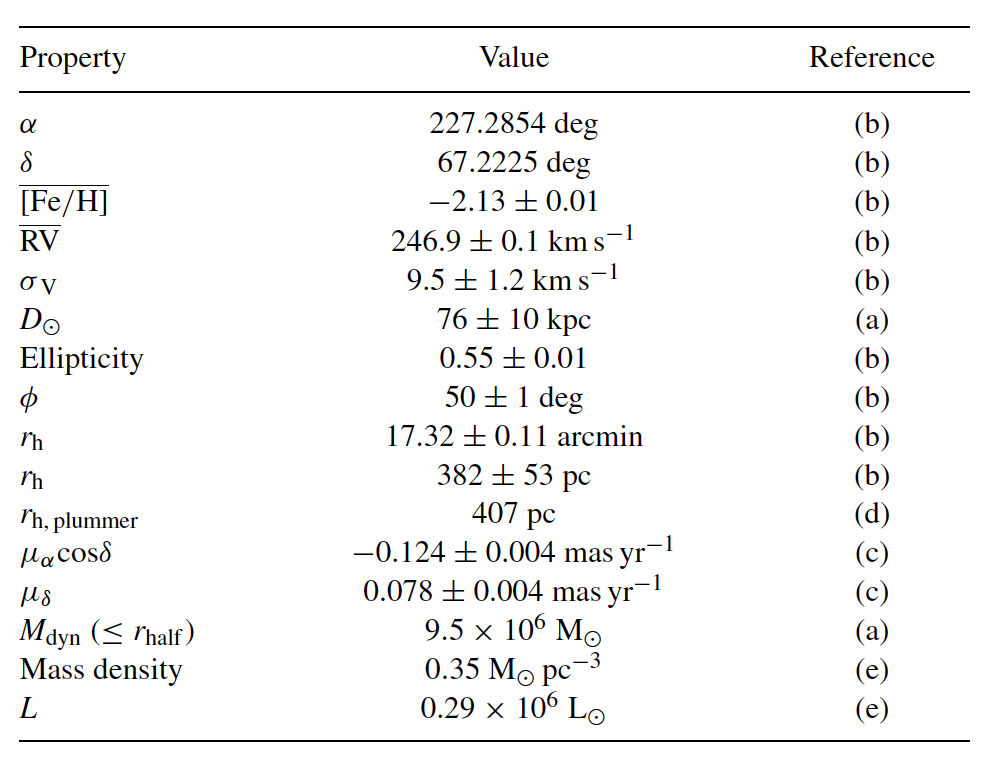
The Ursa Minor Dwarf Galaxy (UMi), discovered in 1954, is a spheroidal dwarf galaxy orbiting the Milky Way as one of its satellite galaxies. Key properties include:
- Heliocentric distance: ~76 ± 10 kpc
- Ellipticity: 0.55 ± 0.01
- Mean metallicity: [Fe/H] = −2.13 ± 0.01
- Dynamical mass within r_h: 9.5 × 10⁶ M☉
These properties make UMi an excellent candidate for exploring the effects of tidal interactions on its stellar population, particularly in its outermost regions.
In this study, we investigate the structural and kinematic properties of the outer regions of UMi. We employed data from the DESI Tertiary Program (6,548 stars within 18 r_h) to estimate membership probabilities using a GMM combined with MCMC sampling, and used the DESI Jura dataset to extend our search beyond 20 r_h.
2. Data
The Dark Energy Spectroscopic Instrument (DESI) is a state-of-the-art, 5,020-fiber spectrograph mounted on the 4-meter Mayall telescope at Kitt Peak National Observatory. While DESI’s primary mission is to measure the expansion history of the universe, its Milky Way Survey (DESI-MWS) targets over 7 million stars, providing high-quality spectroscopic data for detailed chemo-dynamical studies of systems like UMi.
2.1 DESI Tertiary Program for UMi
The DESI Tertiary Program leverages opportunities when the instrument is not fully operational, such as when only a subset of the instrument’s petals are active. This approach ensures that valuable observational time is not wasted, enabling detailed studies of UMi’s stellar population even at partial instrument capacity.
2.2 DESI Jura
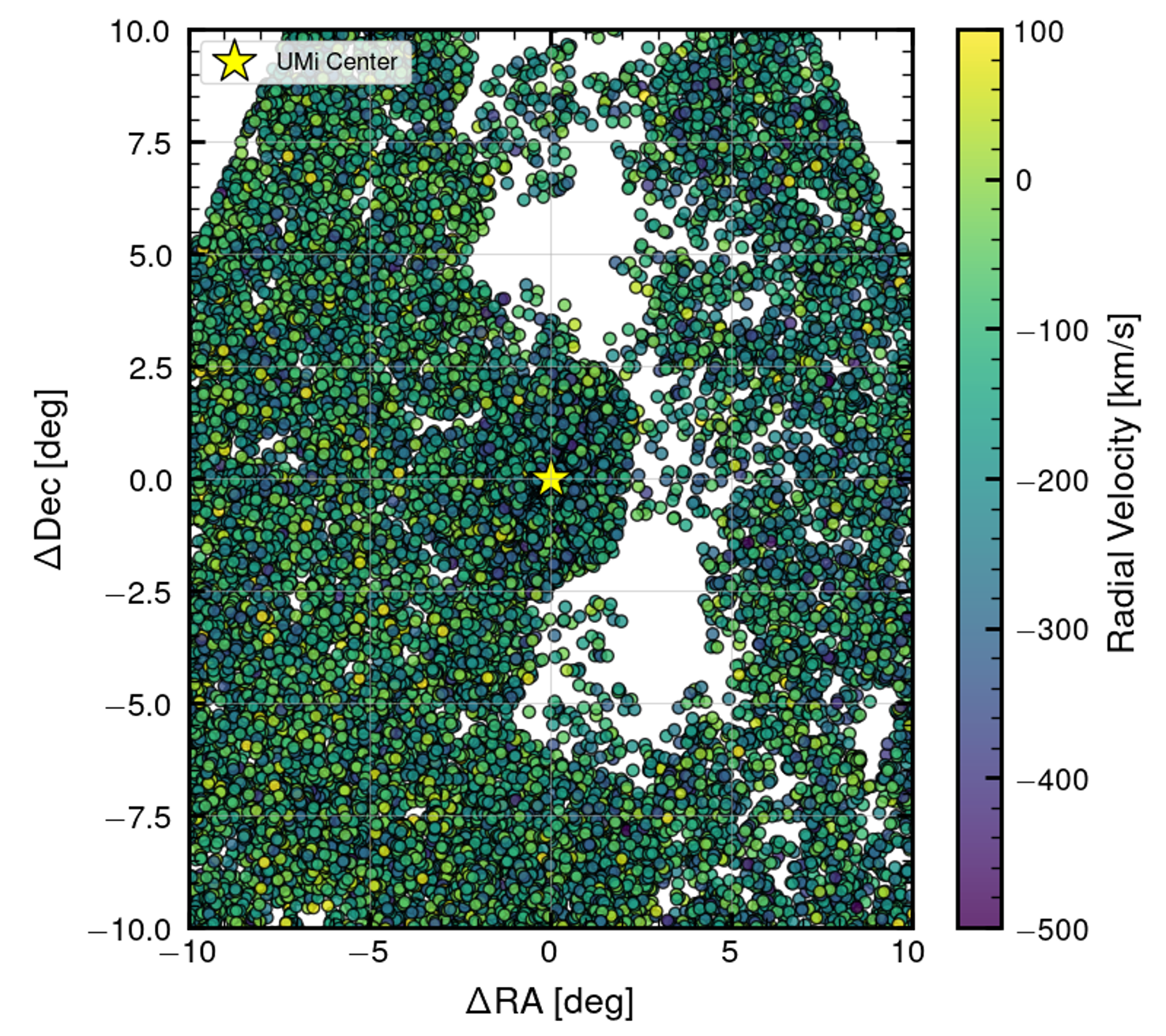
The DESI Jura dataset is a comprehensive collection that includes Survey Validation (SV) data as well as the entirety of the main and tertiary data gathered between May 14, 2023, and April 9, 2024, processed using the RVS pipeline. Since the Jura dataset is extremely large, we performed a 10-degree cut from the center of UMi to focus on a manageable subset.
2.3 Data Reduction
To ensure data quality and reliability, the following selection criteria were applied to both datasets:
| Criterion | Value |
|---|---|
| Radial velocity range | −600 < V_RAD < 600 km/s |
| Velocity error | V_RAD_ERR < 15 km/s |
| Metallicity floor | [Fe/H] > −3.98 |
| Surface gravity | log g < 4 |
| RVS warning flag | RVS_WARN = 0 |
| Primary selection | PRIMARY = True (Jura only) |
3. Methodology
3.1 Gaussian Mixture Modelling and MCMC
We apply a two-component Gaussian Mixture Model to describe the distribution of key stellar parameters — heliocentric radial velocity (v_hel), metallicity ([Fe/H]), and proper motions (μ_α*, μ_δ) — as a mixture of two populations: UMi stars and Milky Way field stars.
The total likelihood for the GMM is:
ln L(θ; v_hel, [Fe/H], μ_α, μ_δ) = ln(p_star · L_star + (1 − p_star) · L_back)
where L_star and L_back represent the likelihoods for the UMi and background components respectively, each combining univariate normal distributions for radial velocity and metallicity with a bivariate normal distribution for proper motions.
Key modeling choices:
- Radial velocity of UMi stars: modeled as a linear function of angular distance from the galaxy center
- Metallicity: parameterized separately for UMi and background, as a function of ellipticity-corrected radius
- Proper motions: bivariate Gaussian accounting for correlation between μ_α* and μ_δ
The MCMC sampling was performed using the emcee package, with initial parameter values derived from Nelder-Mead optimization. The posterior distributions yield membership probabilities for each star, with a threshold of p > 0.7 used to classify UMi members.
3.2 Searching for Members at the Outskirts
To identify potential UMi members in the Jura dataset, a systematic 2σ boundary cut was applied based on the distribution of key parameters derived from high-probability members (p > 0.7) of the Tertiary dataset:
| Parameter | Mean | σ |
|---|---|---|
| [Fe/H] | −2.22 | 0.37 |
| RV (km/s) | −243.69 | 2.75 |
| PMRA (mas/yr) | −0.13 | 0.33 |
| PMDEC (mas/yr) | 0.07 | 0.37 |
Stars were selected if their observed values satisfied:
|Parameter − Mean| < 2 × √(σ² + σ²_obs)
across all parameters simultaneously. Only stars located beyond 20 r_h were retained for further analysis.
4. Results
4.1 Membership Determination
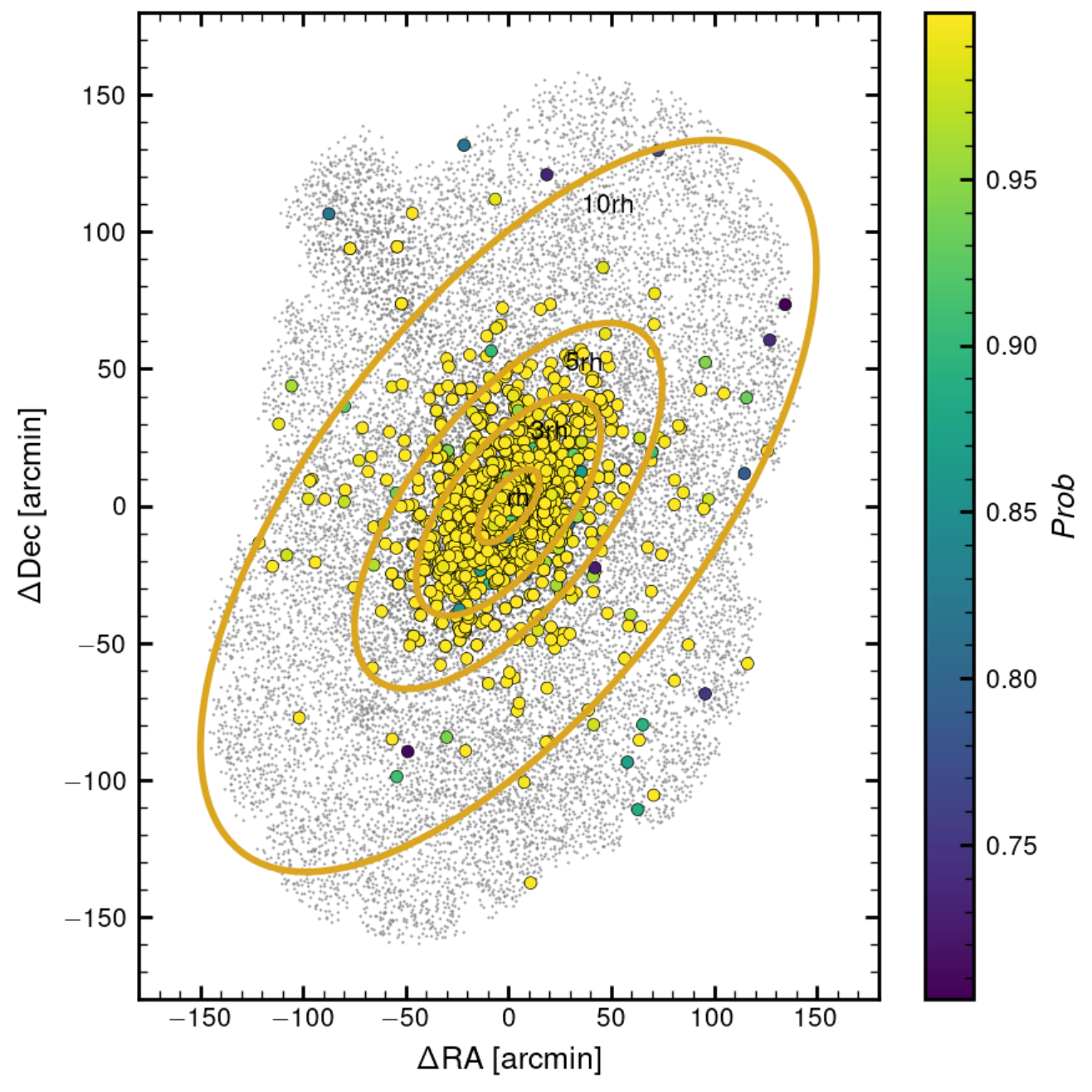
Applying the probability threshold of 0.7 to the MCMC-GMM results, 2,851 stars were identified as probable UMi members from the Tertiary dataset.
4.2 Membership Characterization
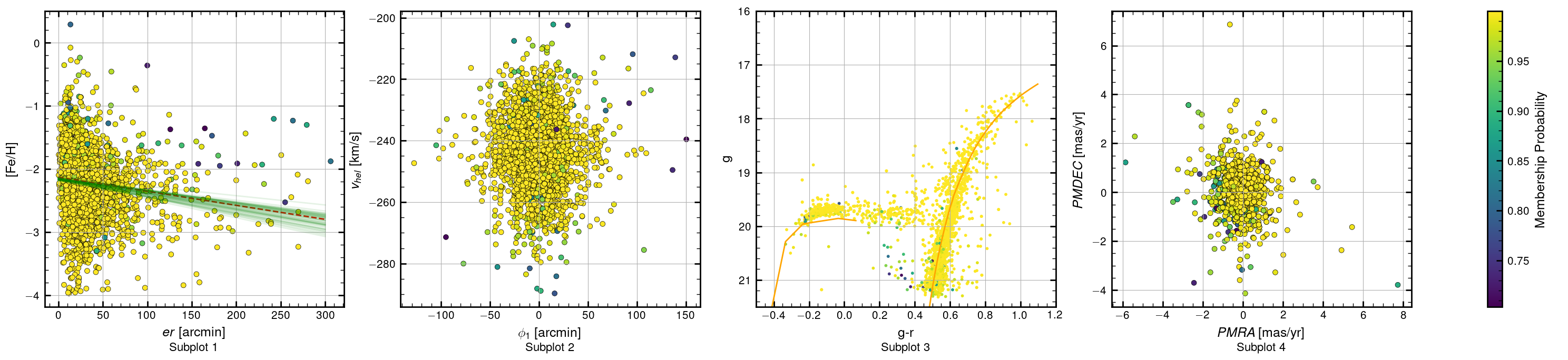
The confirmed members were analyzed across multiple parameter spaces:
Key findings from the characterization:
- Metallicity gradient: A slight negative correlation between [Fe/H] and elliptical radius — stars closer to the galaxy core tend to be more metal-rich, consistent with expectations for dwarf galaxies.
- No velocity gradient: No strong correlation between heliocentric velocity and angular position, arguing against coherent rotation.
- CMD consistency: High-probability members trace a well-defined sequence consistent with theoretical isochrones and M92 empirical data.
- Kinematic clustering: Member stars cluster tightly in proper motion space, sharing distinct kinematics from foreground contamination.
4.3 Potential Outskirt Members
From the Jura dataset, 30 potential UMi stars were identified beyond 20 elliptical radii. Their spatial distribution was analyzed alongside UMi’s orbit, integrated using the galpy library over ±0.5 Gyr.
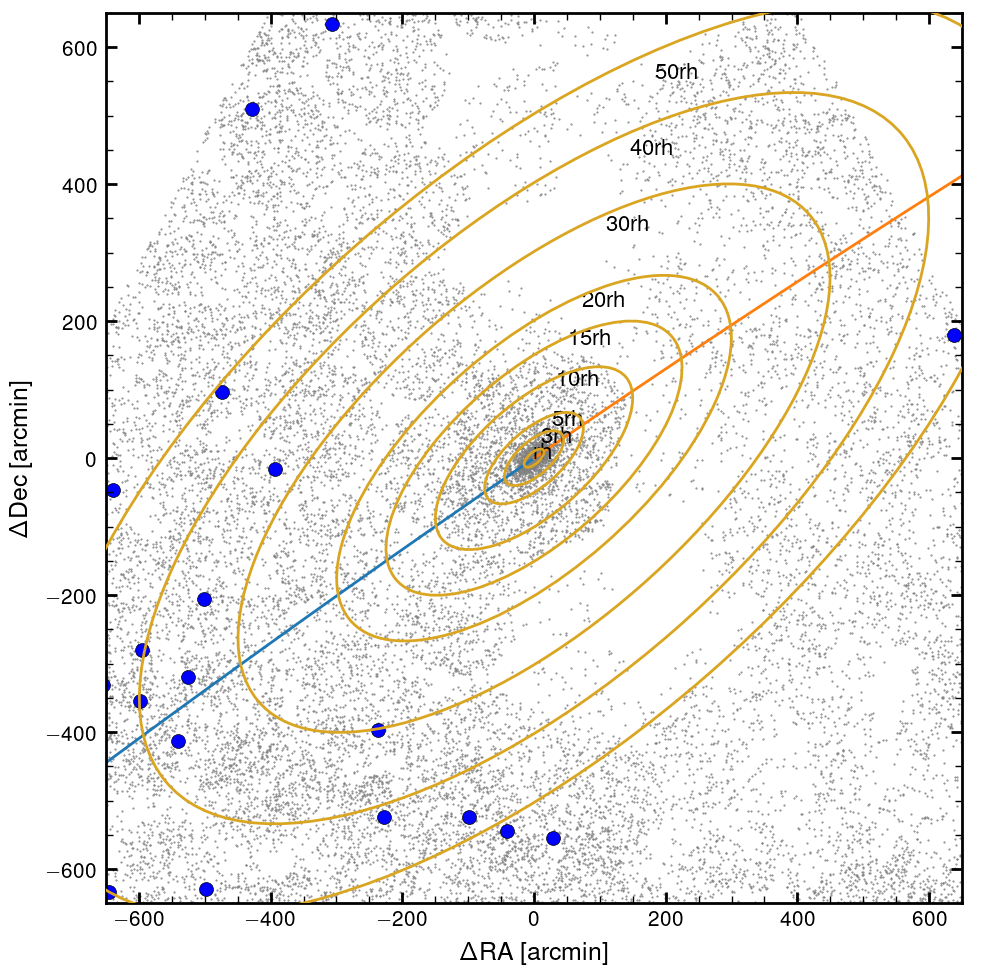
These candidates were further refined by comparing their observed kinematics against the predicted orbital properties:
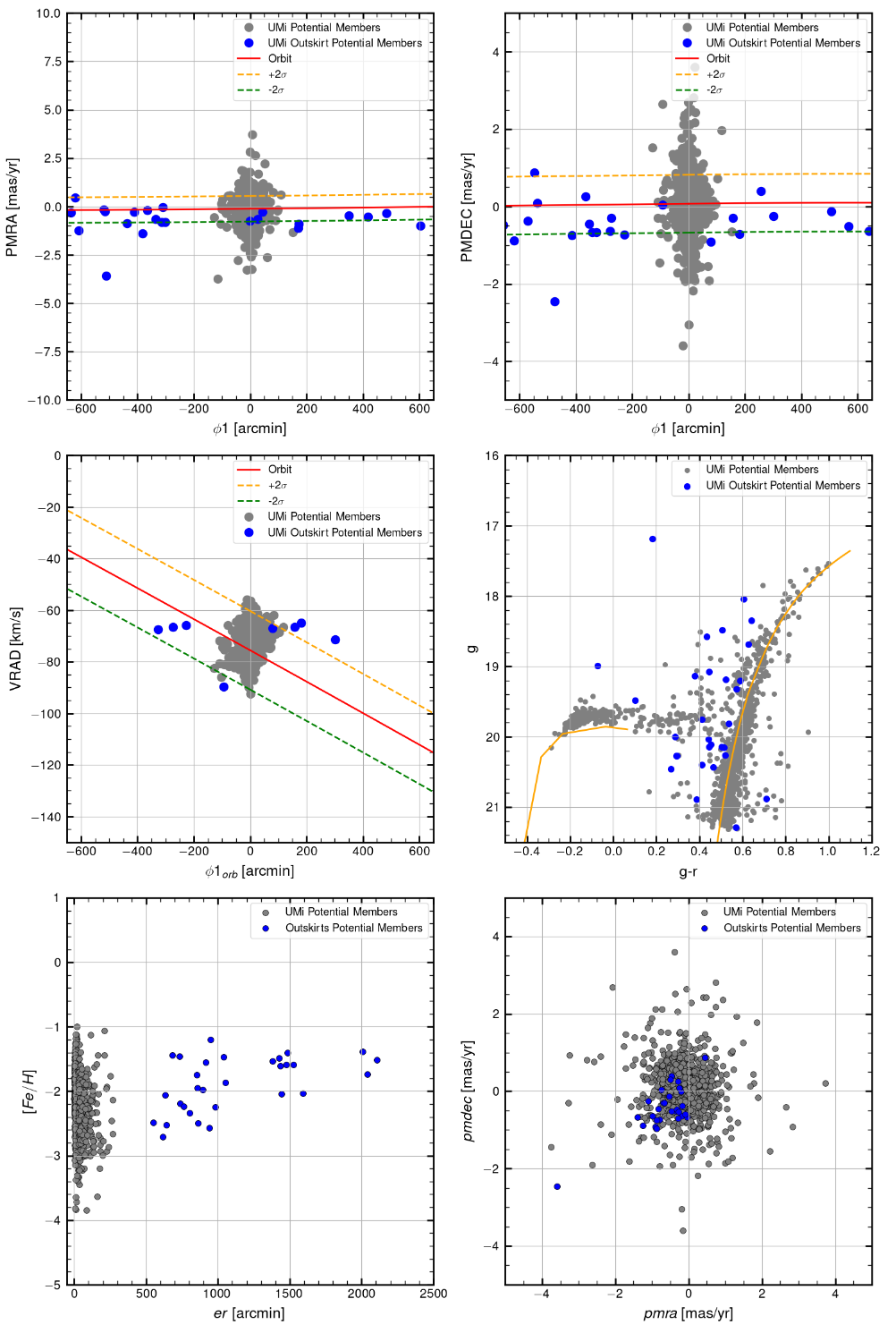
Out of the 30 candidates, four stars stood out as particularly compelling, with properties consistent across all diagnostic plots. Two of these were examined in detail:
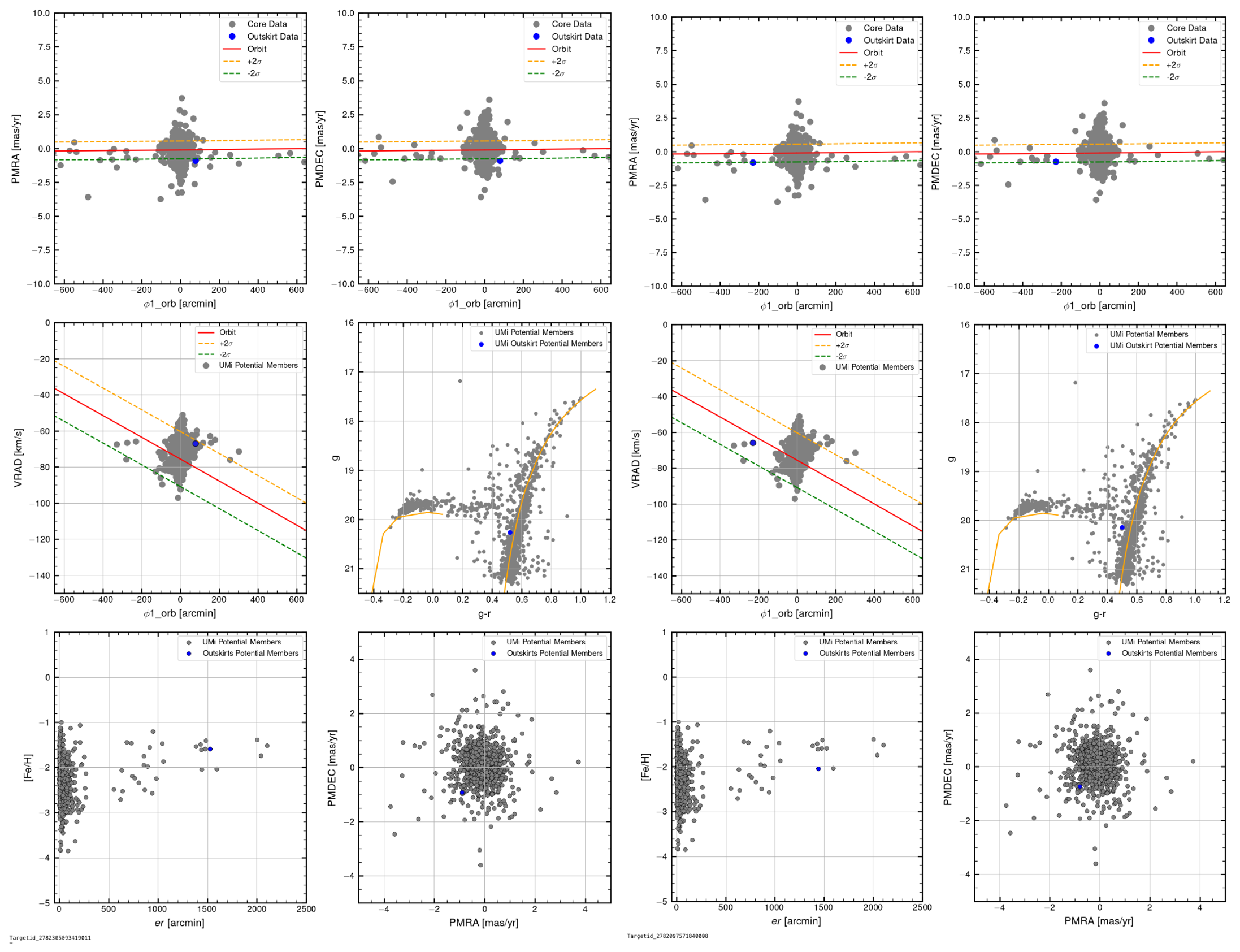
Both stars exhibit:
- Proper motions (PMRA, PMDEC) consistent with orbital predictions, well within ±2σ confidence intervals
- Radial velocities closely following the expected trend with orbital angular coordinate
- Photometric positions matching the expected stellar locus and isochrones
- Metallicities consistent with the distribution of known UMi stars at large elliptical radii
5. Discussion: Tidal Stripping
The spatial distribution of the four candidate outskirt stars raises intriguing questions. Despite being located far from UMi’s central region (beyond 20 r_h), these stars do not appear to follow the orbital path predicted by tidal stripping models. Stars subject to tidal stripping should be dispersed along tidal tails aligned with the galaxy’s orbit — yet these candidates deviate from that expectation.
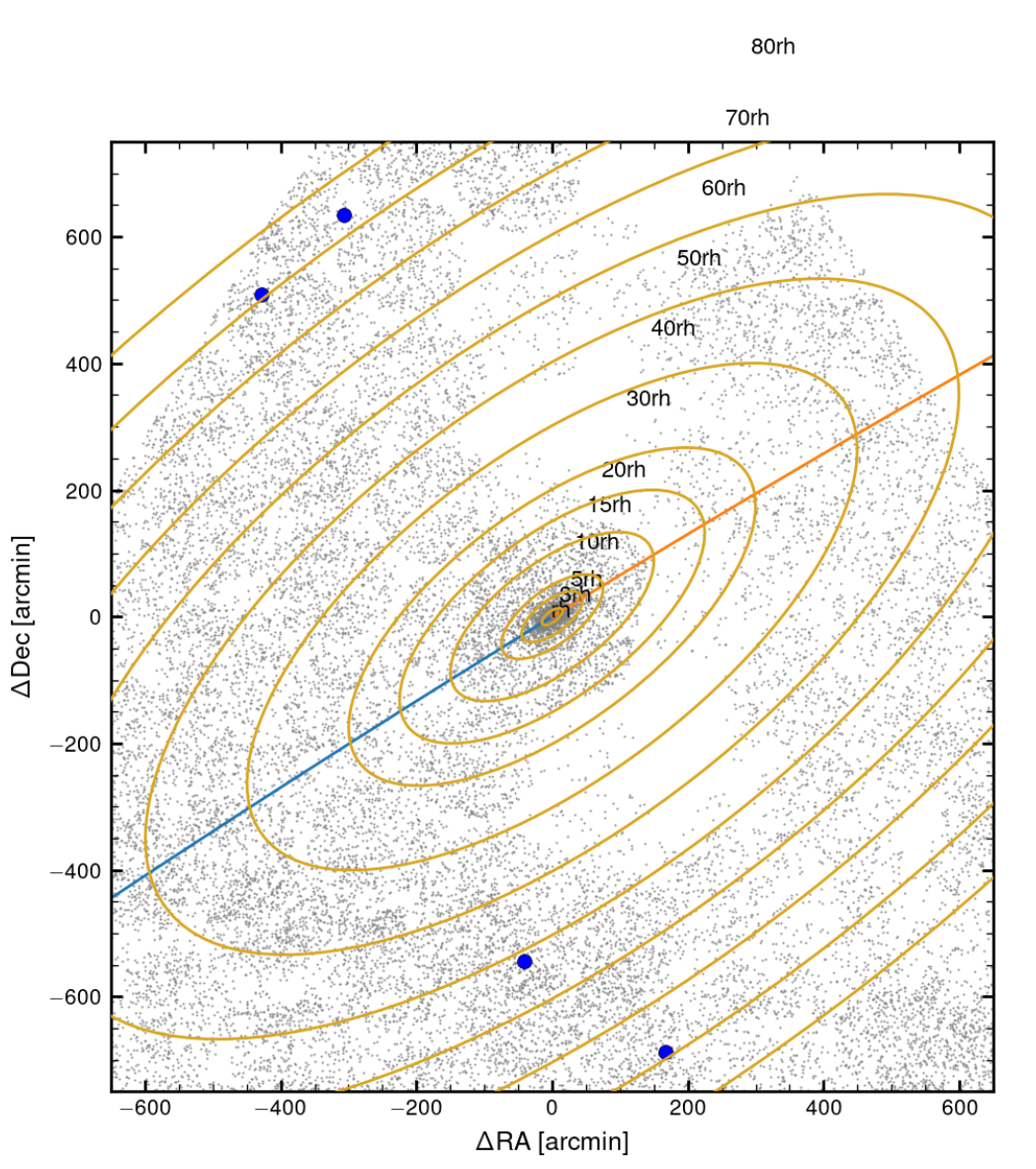
This suggests several possibilities:
- These stars may be foreground or background objects unassociated with UMi
- They may belong to a different stellar population
- Weaker tidal interactions not captured by the orbit model could still connect them to UMi
Proposed future investigations include:
- Surface number density profiling — Derive the surface density profile and its logarithmic derivative to identify departures from an exponential profile that could indicate tidal features
- Break radius identification — Search for a “break” radius where the surface density flattens, marking the transition from a bound to an unbound stellar population
6. Conclusion
This study conducted a detailed analysis of stellar membership in the Ursa Minor Dwarf Galaxy using data from the DESI Tertiary Program and Jura dataset, combining Gaussian Mixture Models with MCMC sampling.
Key results:
- 2,851 stars confirmed as probable UMi members within 18 half-light radii, with comprehensive characterization of their kinematic, photometric, and chemical properties
- 30 potential outskirt members identified beyond 20 r_h from the Jura dataset
- 4 particularly compelling candidates whose kinematics and chemodynamics align with expected UMi properties
- The spatial distribution of these outskirt candidates does not follow typical tidal stripping patterns, suggesting that other processes may be at play
Future work should focus on detailed tidal analysis — including surface number density profiles and break radius identification — to better understand the mechanisms shaping UMi’s extended stellar halo. The methodologies applied here can be extended to other dwarf galaxies, offering a framework for exploring the interplay between internal and external forces in shaping these systems.
Acknowledgements
This research was conducted at the David A. Dunlap Department of Astronomy and Astrophysics, University of Toronto. Special thanks to Prof. Ting S. Li and Dr. Nathan R. Sandford for their invaluable guidance, and to Andrew Li for providing reference code on Gaussian mixture models and MCMC for Jhelum and Indus. Additional thanks to Dr. Gustavo E. Medina and Dr. Mairead Heiger for their contributions and support.
Data: Dark Energy Spectroscopic Instrument (DESI), Gaia EDR3
Software: astropy, emcee, matplotlib, numpy, scipy, galpy